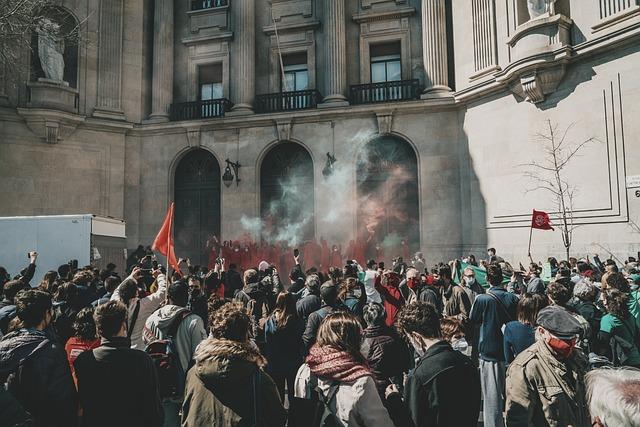
In recent years, the African continent has witnessed a surge in public protests challenging governance, demanding social justice, and advocating for political reform. These movements, which manifest in various forms—from peaceful demonstrations to forceful uprisings—have sparked a critical discourse surrounding the interconnectedness and motivations behind them.Within this complex landscape, the question arises: are these protests merely coincidental expressions of discontent, a corrective response to historical grievances, or a contagious wave of activism fueled by regional or global influences? In this article, we delve into the dynamics of African protest politics, exploring the nuances of collective action and the broader implications for democracy and stability.Drawing insights from recent studies conducted by the Institute for Security Studies, we aim to provide a complete understanding of how social, economic, and political factors converge to shape the trajectories of these movements across the continent.
Understanding the trends in African Protest Politics
The landscape of protest politics in africa has evolved significantly over the past two decades, reflecting a complex interplay of local grievances, regional dynamics, and global influences. Public dissent has frequently emerged from factors such as economic inequality, political repression, and social injustice. Many protests share common characteristics, including the use of social media as an organizational tool, often leading to rapid mobilization and participation. This phenomenon prompts several questions regarding the motivations behind these movements, such as:
- Are they primarily driven by local issues or do they reflect broader regional trends?
- Is there a meaningful impact from external influences, such as international advocacy coalitions?
- Can we identify a pattern or contagion effect among neighboring nations’ movements?
Recent events point to a possible contagion effect, wherein protests in one country inspire similar movements in others, facilitated by shared grievances and the spread of information through the internet. These dynamics reveal an observable pattern, where successful mobilizations in one nation can bolster activism across borders, leading to both collaboration and competition among dissenters. Data from notable protests can be summarized as follows:
| Country | Year | Main Issues | Outcome |
|---|---|---|---|
| Sudan | 2019 | Dictatorship, Economic Crisis | Fuel price cuts, regime change |
| Nigeria | 2020 | Police Brutality, Governance | Increased police reforms, ongoing activism |
| Tunisia | 2021 | Corruption, Youth Unemployment | Political reforms, civil unrest continues |
The analysis of these events sheds light on how protest politics can act as a catalyst for reform or, conversely, intensify existing conflicts. Understanding these trends requires a nuanced examination of how local realities intertwine with broader socio-political currents, shaping the trajectory of activism across the African continent.

The Role of social Media in Shaping Protest Movements
The advent of social media has revolutionized the way individuals engage with political dissent and collective action. In Africa, platforms such as Twitter, Facebook, and WhatsApp have become pivotal tools for mobilizing grassroots movements, allowing protesters to organize rallies, share real-time updates, and amplify their messages far beyond conventional media reach. The speed and accessibility of information on these platforms have enabled activists to coordinate efforts quickly, often circumventing state-controlled media narratives. This digital communication not only aids in organizing large-scale demonstrations but also fosters a sense of solidarity among diverse groups. Consequently, social media has become a crucial element in fostering an surroundings where diverse voices can converge into a unified call for change.
However, the influence of social media is not without its challenges. It can often act as a double-edged sword; while it facilitates unity and association,it can also lead to the spread of misinformation. In many instances, false narratives can undermine protest movements or even incite violence, complicating the struggle for political reform. Moreover, governments across the continent have recognized the power of these platforms and are increasingly employing tactics to stifle dissent, including internet blackouts and stringent regulations. Understanding the dynamics of social media in protest politics is essential for comprehending the broader landscape of contemporary African governance and civil society.To illustrate the contrasting impacts of social media on protest movements, the table below summarizes key outcomes from various protests across the continent.
| Country | protest Event | Social Media impact |
|---|---|---|
| Sudan | 2019 Uprising | Mobilized mass demonstrations, leading to regime change. |
| Zimbabwe | 2019 Anti-Government Protests | Facilitated information sharing, yet faced state suppression. |
| Kenya | 2017 Elections Fallout | Enabled rapid communication but also fueled disinformation. |

Analyzing the Impact of economic Factors on Civil Unrest
The interplay between economic conditions and civil unrest presents a complex tapestry woven from multiple threads. In many African nations, the correlation between economic decline—characterized by rising unemployment, inflation, and inequality—and protests is stark. Discontent often bubbles over when basic needs are unmet, leading to widespread agitation.As an example,when essential services dwindle and food prices soar,citizens grow frustrated,believing their governments are failing to provide economic security. this discontent is not merely a local phenomenon; it reverberates across borders, as economic grievances translate into collective action, egged on by social media and regional influences.
Furthermore, the role of external factors cannot be dismissed in the landscape of protest politics. Global economic trends, such as fluctuating commodity prices and foreign investment patterns, can exacerbate local pressures, creating a perfect storm for unrest. Governments that rely heavily on exports of resources may find themselves vulnerable to international market fluctuations, directly influencing their domestic stability. Key factors include:
- Commodity Prices: significant drops in prices can lead to reduced national income, impacting service provision.
- Foreign Aid: cuts in foreign assistance can precipitate immediate fiscal crises, sparking public dissatisfaction.
- Global Economic Shifts: Economic downturns abroad can lead to job losses and factory closures within countries heavily reliant on exports.
| Economic Factor | Impact on Civil Unrest |
|---|---|
| High Unemployment | Increased protests and calls for government accountability. |
| Inflation | Decreased purchasing power leads to social unrest and mob actions. |
| Income Inequality | Widening divisions amplify anger and collective mobilization. |

Lessons from Historical Context: Patterns of Protest in africa
Throughout Africa’s tumultuous history, patterns of protest have emerged as powerful responses to systemic injustices, authoritarian rule, and social grievances. The waves of dissent witnessed from the liberation movements of the 20th century to the contemporary youth-led movements illustrate a complex tapestry woven with threads of historical struggles,socio-political discontent,and economic disparities. One can observe a cyclical nature of protests, where past uprisings inform and sometimes ignite contemporary actions. The influence of social media has magnified this phenomenon, allowing movements to inspire and replicate across borders, creating a contagion effect that transcends national boundaries and echoes the sentiments found in discontent, inequality, and demands for accountability.
This historical context reveals several key patterns in African protest politics, which can be summarized as follows:
- Grassroots Mobilization: Many protests originate at community levels, driven by local grievances.
- Transnational Solidarity: African protests often gain momentum and support from other regions, highlighting a shared struggle.
- Adaptation of Tactics: Protesters utilize a mix of traditional methods and digital strategies, often leading to innovative forms of civil disobedience.
Creating a clearer understanding of these elements not only sheds light on the motivations behind protests but also highlights the evolving nature of dissent in Africa. Below is a brief overview of notable protests and their impacts:
| Protest Movement | Year | Key Outcome |
|---|---|---|
| Anti-Apartheid Movement | 1980s | End of Apartheid |
| Arab Spring | 2010-2012 | Regime Changes in Several Countries |
| End SARS Movement | 2020 | Government Reforms in nigeria |
This reflection on historical contexts encapsulates the essence of protest dynamics on the continent, revealing how lessons from the past are continuously reshaped into bold cries for change.

Strategic Recommendations for Policy Makers to Address Grievances
To address the multifaceted grievances underpinning african protest movements, policymakers should prioritize open communication channels with civil societies. Establishing platforms for dialogue can mitigate tensions and foster greater trust between the government and citizens. Such efforts could include:
- Regular town hall meetings to discuss community issues
- Establishment of feedback mechanisms for public policy
- Involvement of youth organizations in decision-making processes
Moreover, it is indeed crucial for governments to invest in social and economic reforms that directly tackle the root causes of unrest. Engaging in data-driven policy-making can help identify the specific needs of disenfranchised communities. Key areas for reform may include:
- Creating job opportunities through vocational training programs
- Improving access to essential services like healthcare and education
- Encouraging local entrepreneurship to boost economic resilience

Building Resilience: Strengthening Civil Society and Democratic Institutions
The landscape of civil society in Africa is rapidly evolving, shaped by a variety of factors that underscore the importance of resilience in democratic institutions. In times of unrest, the ability of civil society organizations to mobilize resources, advocate for rights, and provide platforms for dialogue becomes critical. These organizations often serve as the backbone of democratic engagement,ensuring that citizens’ voices are amplified and that they can hold their governments accountable. Key strategies for strengthening this resilience include:
- Enhancing civic education: Empowering citizens with knowledge about their rights and roles in the democratic process.
- Collaborative networking: Building coalitions among various civil society groups to share resources and strategies.
- Utilizing technology: Leveraging social media and digital tools to mobilize support and communicate effectively.
Furthermore, the relationship between civil society and the state plays a significant role in fostering robust democratic institutions. Governments that are open to collaboration with civil society tend to fare better in terms of stability and public trust. Conversely, authoritarian regimes that suppress dissent often find their grip weakened by the very organizations they seek to eliminate. Analyzing recent trends across African nations, we can identify several essential aspects of this relationship:
| Aspect | Impact on Democracy |
|---|---|
| Government Engagement | Facilitates policy dialogue and citizen participation |
| Repression of Civil Society | Increases public dissent and potential for unrest |
| International Support | Strengthens local advocacy efforts and resources |

Insights and Conclusions
the complex landscape of African protest politics presents a multifaceted interplay of coincidence, correction, and contagion. As we have explored, the recent waves of protests across the continent often reflect localized grievances that resonate with broader socio-political trends. These movements are not merely isolated incidents; rather, they form a tapestry of dissent that is shaped by historical contexts, regional dynamics, and the interconnectedness of civil society across borders.
The analysis highlights the crucial role of youth in these protests, their demands for accountability, and their call for systemic change, which resonate not only within their own nations but also inspire solidarity in neighboring countries. As governments grapple with these emerging challenges, understanding the nuanced motivations behind these movements will be critical.
Ultimately,the future of African protest politics hinges on how states respond to the aspirations of their citizens. Will they view these protests as opportunities for meaningful engagement and reform, or will they resort to repression and denial? The answer to this question will determine not only the trajectory of individual nations but also the continent’s journey towards greater democracy and social justice. As these dynamics continue to evolve,the world will be watching closely,mindful that the actions taken today will shape the political landscape of Africa for generations to come.